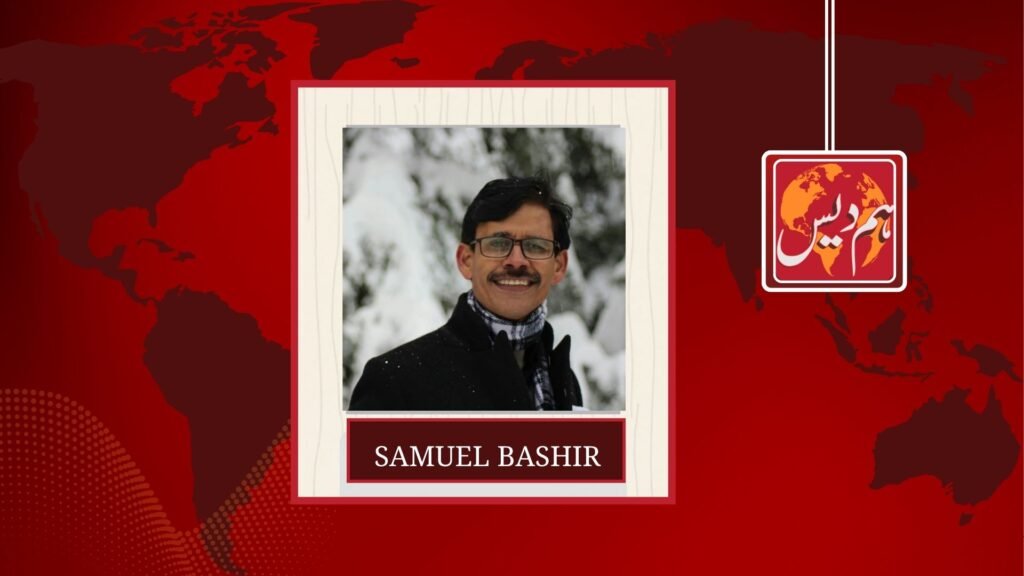
Samuel Bashir
On 19th June, 2014, the Supreme Court of Pakistan, under the leadership of Chief Justice Tassaduq Hussain Jillani, delivered a landmark judgement that remains one of the most significant judicial pronouncements on religious freedom, equal citizenship, and the protection of religious minorities in Pakistan. More than a legal ruling, the judgement offered a constitutional roadmap for building a more inclusive society where all citizens, regardless of faith, enjoy equal rights and protection under the law.
Twelve years later, the anniversary of the judgement presents an opportunity to assess its implementation. Has Pakistan fulfilled the promise of this historic verdict, or has the vision articulated by Justice Jillani remained largely unrealised?
The judgment emerged in the aftermath of the September 2013 tragic suicide attack on All Saints Church in Peshawar, which martyred more than 80 worshippers and injured many others. The attack highlighted the growing vulnerability of religious minorities and raised urgent questions about the state’s responsibility to protect its citizens.Responding to petitions concerning the security and rights of religious minorities, the Supreme Court issued a comprehensive judgement that sought to address both immediate security concerns and long-term structural discrimination.The Court instructed federal and provincial governments to undertake several measures, including the seven key directives:Establish a National Council for Minorities’ Rights.
Create a special task force to promote religious harmony.
Revise educational curricula to foster tolerance and pluralism.
Take effective action against hate speech and religious incitement.
Ensure protection of minority places of worship.
Implement the five percent employment quota for minorities in public service.
Develop mechanisms to prevent discrimination and ensure prompt action against crimes targeting minorities.
These directives reflected the Court’s understanding that religious freedom requires both legal guarantees and practical safeguards.
Twelve Years Later: What Does the Data Reveal?
One of the most telling indicators of implementation challenges is the Supreme Court’s continued involvement in monitoring compliance.
According to reports by the Centre for Social Justice (CSJ), implementation benches of the Supreme Court held dozens of follow-up hearings after the original judgment. By 2024:
“A DECADE OF NON-COMPLIANCE”
https://csjpak.org/publications/A_Decade_of_Non_Compliance.pdf
34 implementation hearings had taken place.
89 additional directives had been issued.
None of the seven original directives had been fully implemented.
These figures suggest that the primary challenge has not been the absence of judicial guidance but the lack of sustained political and administrative commitment.
Measuring Compliance: Progress Remains Limited
A CSJ assessment conducted eight years after the judgment found that overall implementation stood at approximately 22 percent. Despite repeated judicial interventions, progress remained uneven across provinces and sectors.
A decade-long review further revealed low compliance scores:
Government Compliance Score
Sindh. 9/25
Punjab. 8/25
Balochistan. 6/25
Khyber Pakhtunkhwa. 5/25
Federal Government Lowest performance
These findings indicate that implementation has been partial at best and inconsistent across jurisdictions.
Perhaps the most significant achievement linked to the Jillani Judgment has been the eventual creation of institutional mechanisms focused on minority rights (National Commission for Minorities’ Rights).
For years, civil society organizations argued that the government had failed to establish an independent statutory commission as envisioned by the Court. While non-statutory bodies were formed, concerns remained regarding their independence and effectiveness.
The eventual legislative efforts to establish a formal National Commission for Minorities’ Rights represent an important step forward, although questions about its autonomy, powers, and resources continue to be debated.
Areas Where Progress Has Fallen Short;
Educational Reform
The Court emphasized the importance of promoting tolerance through education. However, curriculum reform has proceeded slowly, and several studies continue to identify discriminatory narratives and insufficient representation of religious diversity in educational materials.
Hate Speech and Religious Intolerance
The judgment called for decisive action against hate speech and incitement. Yet religiously motivated hostility and discriminatory rhetoric continue to appear in both traditional and digital spaces, demonstrating the gap between policy commitments and enforcement.
Employment Quotas
The five percent minority quota remains one of the most frequently cited implementation failures. Although the quota exists in policy, monitoring and enforcement mechanisms remain weak, resulting in underrepresentation in many public institutions.
Protection of Places of Worship
Attacks on and desecration of minority places of worship continue to occur periodically. While security measures have improved in some locations, the broader objective of guaranteeing safe and equal religious practice remains unfinished.
What Has Pakistan Lost?
The greatest loss may be the missed opportunity to strengthen social cohesion and constitutional citizenship.
Had the judgment been implemented fully and promptly:
Religious minorities might have developed greater trust in state institutions.
Sectarian and religious intolerance could have been reduced through education and enforcement.
Pakistan’s international human rights standing might have improved significantly.
Constitutional guarantees of equality could have become more meaningful in everyday life.
Instead, implementation delays have weakened the transformative potential of one of Pakistan’s most progressive judicial decisions.
What Has Pakistan Gained?
Despite shortcomings, the judgement has produced several lasting achievements:
Minority rights have become part of mainstream public discourse.
Courts, civil society organisations, and human rights advocates gained a powerful constitutional reference point.
The state has been compelled to periodically review its performance regarding minority rights.
Institutional discussions on inclusion, representation, and religious freedom have become more prominent.
Most importantly, the judgement established a constitutional framework that continues to guide advocacy and reform efforts.
The Central Question
Twelve years later, one fundamental question remains:
Is the problem a lack of laws, or a lack of political will to implement them?
The Jillani Judgement demonstrates that Pakistan’s Constitution already contains significant protections through Articles 20, 25, and 36. The challenge lies not in constitutional principles but in translating those principles into effective public policy and administrative action.
The 19th June, 2014 judgement of Chief Justice Tassaduq Hussain Jillani remains one of the most important judicial interventions in Pakistan’s constitutional history. It articulated a vision of Pakistan based on religious freedom, equal citizenship, and human dignity.
Twelve years later, the record is mixed. Some institutional progress has been made, and awareness of minority rights has increased. Yet the data reveal that the core directives of the judgement remain only partially implemented.
The anniversary of the Jillani Judgment should therefore be viewed not merely as a commemoration of a historic court decision, but as a reminder of an unfinished constitutional promise. The real test for Pakistan is not whether the judgment was historic, but whether the state is willing to fully realise the inclusive vision that it set forth.
Twelve years on, the question remains as relevant as ever: Can Pakistan transform? constitutional guarantees into lived realities for all its citizens, regardless of faith or belief?
Author


















1 Comment
Sherazi sandhu
June 30, 2026, 5:56 pmThanks
REPLY