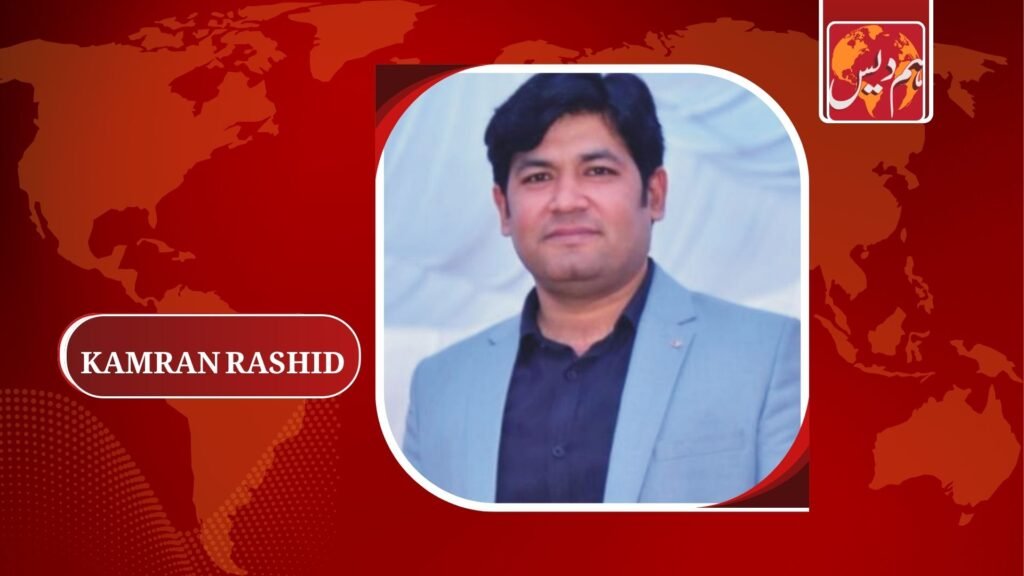
Kamran Rashid
Local government elections are not merely an exercise in choosing representatives at the grassroots level; they are a fundamental pillar of democracy. Effective local governments bring decision-making closer to citizens and play a direct role in addressing everyday concerns such as sanitation, roads, drainage, drinking water, healthcare, and other essential municipal services.As Pakistan prepares for the next phase of local government elections, the political position of the Christian community deserves serious attention. The central question is not simply whether Christians will receive representation but whether their political leadership will be able to move beyond reserved seats and establish a stronger presence on general seats through direct public support.The Christian community has made significant contributions to Pakistan in education, healthcare, social welfare, defence, journalism, and numerous other fields. Yet, at the grassroots political level, effective and meaningful representation remains a challenge.
Beyond Reserved Seats
One of the key issues concerning Christian political representation is the balance between reserved seats and general seats. Reserved seats provide an important constitutional and legal mechanism for minority representation. However, winning a general seat through direct public voting carries a different political significance. It demonstrates that a candidate has succeeded in building support beyond the boundaries of his or her own community.For Christian candidates, contesting general seats can, therefore, be an important step towards strengthening their political influence. Candidates who are capable of addressing the concerns of the entire constituency not only those of the Christian community can potentially build broader electoral support.
The Role of Political Parties
Political parties have a major responsibility in creating opportunities for minority candidates. If Christian candidates are considered suitable only for reserved seats, their political growth will remain limited. Political parties should instead evaluate candidates on merit, public reputation, political ability, and their connection with voters and provide capable Christian candidates opportunities to contest general seats.At the same time, Christian political leadership must develop a clear and realistic strategy. Educated young people, community leaders, social workers, and individuals with a record of public service should be encouraged to enter politics and participate in local decision-making.
The Power of the Vote
The upcoming local government elections also provide the Christian community with an opportunity to demonstrate the political strength of its vote. Political fragmentation can weaken representation, while unity around capable candidates and genuine local issues can increase political influence.However, political unity should not mean unconditional support for a particular party or candidate. Voters should assess candidates on the basis of their character, competence, public service record, manifesto, and commitment to solving local problems.
A Political Opportunity
For the Christian community, local government elections should not be viewed merely as a contest for a limited number of seats. They offer an opportunity to establish a stronger political future in which minority representatives play an active role in local governance, raise public issues, and earn political credibility through performance.If political parties provide genuine opportunities, Christian leaders rise above personal and group differences, and voters make informed decisions based on merit and performance, the upcoming local government elections could mark a new chapter in the political representation of Pakistan’s Christian community.Ultimately, political strength at the local level is not measured only by the number of seats won. It is measured by public trust, effective representation, and tangible performance.The upcoming elections will, therefore, be an important test not only for Christian political leadership but also for Pakistan’s commitment to inclusive and participatory democracy.
Author














2 Comments
Shoukat Javed
August 24, 2026, 3:57 amNice effort
REPLYShezal Naveed
August 25, 2026, 6:09 amVery informative 👍
REPLY