
Misfah Ajmal
A historical narrative comparing Martin Luther and Martin Luther King Sr., exploring their faith, courage, leadership, and the timeless lessons their lives offer.
In 1950s Atlanta, a Black man boarded a city bus and took a seat near the front. The driver told him to move. He stayed seated. The driver threatened to call the police. The man said, “Call them.” He was not a famous leader. He was not part of any organization. He was a factory worker on his way home. But he had been listening to a pastor at Ebenezer Baptist Church — a man named Martin Luther King Sr. — who preached that a person’s dignity was not negotiable.The police came. The man was arrested. But something shifted in the other passengers that day. Not because of a speech. Because of one ordinary person who decided he would not accept humiliation anymore. That is how change actually happens. Not always with marches and microphones. Sometimes with a bus ticket and a refusal.
The Arising Questions in View:
What does it actually cost to stand for what is right? Not in theory, but in real life — when your job is at risk, when your community turns against you, when the powerful have made up their minds? Two men from different centuries faced this same question. One was a German monk in 1517. The other was a Baptist pastor in 1930s Atlanta. Neither had wealth. Neither had political power. Both had something else: the conviction that God’s truth stands above human authority — and the courage to act on it. This article is not about history. It is about what their lives mean for us now — as a society, and as people who claim to follow a faith of love and justice.
From Captive to Truth:
Martin Luther King Sr. did not set out to change the world. He set out to pastor a church. But the church he led — Ebenezer Baptist in Atlanta — sat in a city built on segregation, intimidation, and the daily humiliation of Black citizens. He did not look away. He demanded voting rights when threats kept people from the polls. He stood against police brutality when silence was safer. He refused to accept humiliation — for himself, his family, or any innocent person. His sermons were not just about believing in God. They were about refusing to let any system crush human dignity. When many believers felt that the Church had drifted from the teachings of Scripture, one man chose to speak out. Martin Luther challenged practices and doctrines that he believed were inconsistent with the Bible, sparking the Protestant Reformation. His actions encouraged millions to re-examine their faith and the authority of Scripture, changing the course of Christian history. Five centuries earlier, Martin Luther — a monk and teacher — watched as the Church he loved had drifted from its purpose. Spiritual authority had become financial leverage. The promise of grace had been turned into a transaction
The Courage To Be Uncomfortable:
Justice is not a political position. It is a moral one. When we see people treated as less than human, our faith does not give us the option to stay comfortable. King Sr. had no power except his voice and his conviction. That was enough. When institutions that claim to represent God begin to serve themselves, someone must speak. Not with hate, but with clarity. Not to destroy, but to restore. Luther’s stand was not against faith — it was for it.
A Bold Stand:
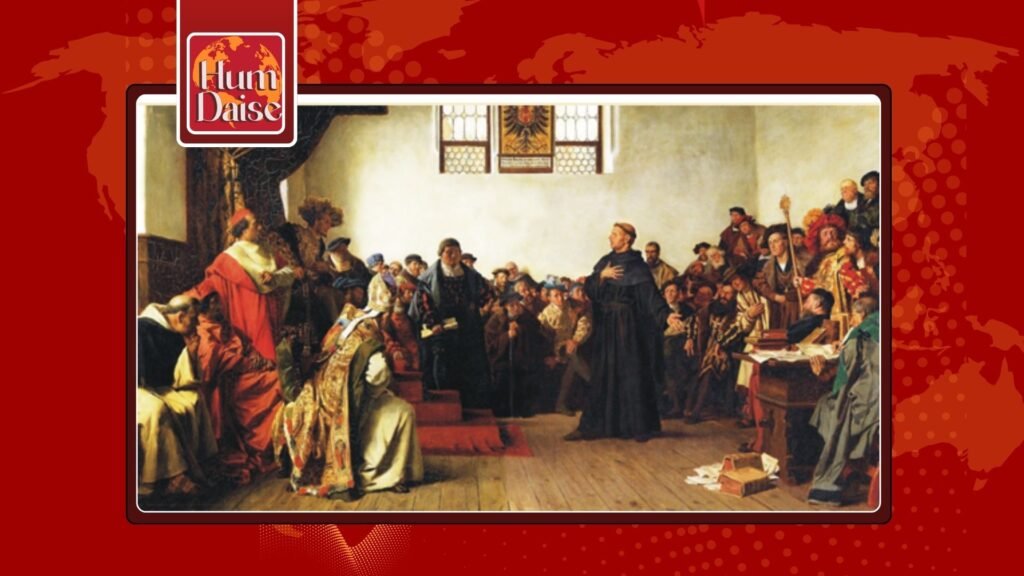
In 1517, he wrote 95 arguments and posted them publicly — not to start a war, but to start a conversation. The response was not dialogue but condemnation. He was excommunicated. He was declared an outlaw. His books were burned. Yet he refused to recant, stating that his conscience was “captive to the Word of God.” While in hiding, he translated the Bible into common German so ordinary people could read it themselves — not through the filter of those in power, but directly.
A Persistent Misconception:
Both men faced the same human failures that still plague us:
When Faith Becomes a Tool for Power:
The Church in Luther’s time had become a political giant. King Sr. faced churches that preached salvation but accepted segregation. In both cases, the problem was the same: the institution had forgotten whom it served. Today, we still see this. Religious language used to justify division. Spiritual platforms turned into personal brands. The question is not whether this happens — it does. The question is whether we will name it
When Unity Is Sacrificed for Control:
Luther watched the Church split. King Sr. watched Christians defend racism. Both saw people of the same faith turn on each other over power and status. The gospel calls for unity. Yet we find reasons to exclude — based on background, opinion, or who holds influence. When a community built on love becomes a place of grudges and hostility, something fundamental has been lost.
Comprehending The Broader Lesson
“Justice Is Not Optional”
A society that tolerates injustice for the sake of stability is not stable — it is silent. King Sr. understood that voting rights, fair treatment, and basic dignity were not favors to be granted. They were obligations of a just society. We still face versions of this. The specific injustices change, but the choice remains the same: speak or stay quiet, act or look away.
Truth Has a Cost:
Luther lost his standing in the Church. King Sr. faced threats and isolation. Neither gained wealth or power. Both gained something harder: the knowledge that they had not betrayed their conscience. In a culture that rewards conformity, this kind of courage is rare. But it is the only kind that actually changes things.
● Faith Belongs to Everyone:
Luther translated the Bible so common people could read it. King Sr. preached in a church open to all. Both believed that truth was not the property of elites. In our time, we still gatekeep — knowledge, opportunity, belonging. A just society does not hoard what should be shared.
A Reminder For Christians:
Elimination Of Politics From Church:
The church is meant for the worship of God, for understanding His nature, and for building a relationship with Him. When it becomes a platform for political ambition or social climbing, it has lost its purpose. This does not mean faith has nothing to say about public life. It means faith must speak with integrity — not as a cover for human agendas.
The Nature of Christ Must Shape the Community:
Holding onto bitterness, grudges, and unforgiveness has no place in a community that claims to follow Christ. These are not minor flaws. They are contradictions of the gospel itself. The challenges young people face — dishonesty, harmful desires, broken relationships, disrespect between people — deserve honest conversation rooted in Scripture, not judgment rooted in fear.
Conclusion:
God made the truth simple. People complicate it for their own benefit or because of the negativity they allow into their hearts — not led by biblical truth but by their own voices, much like the religious leaders Jesus confronted. Faith is meant to promote love, peace, and hope. That is the foundation. When human actions create conflict in the name of religion, they move away from the very message they claim to uphold.
The Choice Still Stands:
Martin Luther and Martin Luther King Sr. lived in different worlds. But they faced the same question: Will you serve God, or will you serve the system that claims to speak for Him? Their answers cost them everything. It gave them something better: integrity. That choice has not gone away. It sits before every institution, every community, and every individual who claims to believe in something beyond themselves. The question is not what they did. The question is what we will do with what they showed us.
















Leave a Comment
Your email address will not be published. Required fields are marked with *