By Kamran Rashid
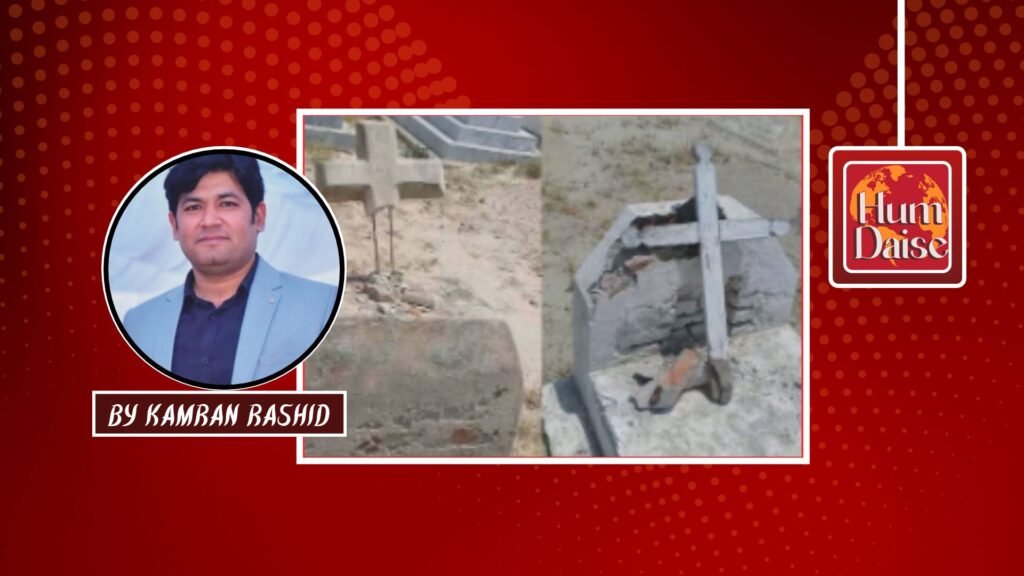
In a Christian graveyard in Faisalabad, grieving families can be seen searching for empty ground to bury their loved ones. Elsewhere, there are plots that, it is claimed, were allocated for graveyards but have never been handed over to the community.
For the Christian community, this is not merely a shortage of land. It is becoming a serious example of administrative neglect, unfinished development work and government promises that are not acted upon.
In several areas of Faisalabad, especially the Christian graveyards of Nigahban Pura and Anwar Colony, lack of space, incomplete boundary walls and sewage problems have made burials even harder. Affected families say they are being deprived even of the basic right to bury their loved ones with dignity and respect
space for burials, families forced to reopen old graves
For David Paul(fictitious name) the shortage of space in the graveyard became a personal grief when his mother died.
Describing his experience, he says:
“We stood at the graveyard holding my mother’s coffin for hours, searching for an inch of clear earth. In the end, we had to reopen an old grave where several generations of our family were already buried. It breaks your heart to disturb one relative’s grave just to bury another.”
The problem is especially severe for poor and middle income Christian families who cannot afford to buy private land, such as in the Gora graveyard, to bury their dead. For them, government or community graveyards are the only option, but even there, space keeps shrinking.
Nigahban Pura: a graveyard won through struggle, now used for the many time
The Christian graveyard in Nigahban Pura, Faisalabad, shows the difficulties the local Christian community faces, from securing burial land to protecting it.
According to Christian elders in the area, the community had to struggle for a long time in the past to obtain this graveyard. Yet even after the land was received, basic facilities were not provided.
Local people such as Younis and Javed (fictitious names) say that because the graveyard had no boundary wall, it became a centre of activity for drug users. After concern from people living nearby, the local Christian community collected donations on its own and began building a boundary wall.
However, because of a lack of funds, the wall is still incomplete today, and the community is forced to keep collecting more donations.Even more worrying is the lack of space for burials. According to a Ex- minority councillor of the area, the graveyard has already been used many times, and with no space left, families are now being forced to bury in the same plots multiple times.
He says that he, together with community elders, submitted applications about this problem to the Assistant Commissioner (AC) City and AC Saddar offices, but the applications have been pending for many years.
The question is: if local representatives informed the administration of this serious problem years ago, why has no solution been found so far? Was any action taken on those applications, and if so, with what result?
Anwar Colony: sewage water flowing toward the graves.
After Nigahban Pura, the Christian graveyard in Anwar Colony, Faisalabad, is another example of administrative problems.
Here the boundary wall is incomplete, and the most serious problem is sewage water, which, according to local residents, is flowing toward the graveyard.People in the area say they contacted the Water and Sanitation Agency (WASA) office several times and lodged complaints, but there has been no significant improvement.
Their own relatives are buried in this graveyard, so sewage water reaching the graves is for them not only a matter of hygiene and health but also one of religious respect and human dignity.
Local residents demand that WASA immediately divert the sewage water and take practical steps to protect the graveyard from this pollution.
Administration’s position: finding land within city limits is difficult
On the question of new land, Pastor Daniel Sadiq (fictitious name) says the Christian community has repeatedly applied to the relevant authorities for new land, but each time they get the same reply: no suitable government land is available within city limits.
In his words:
“Commercial projects and construction in the city keep growing, but the problem of a place for the Christian community to bury its loved ones with dignity is not being solved. This is an extremely painful situation for us.”
On the other side, a local government representative acknowledges the problem, saying it is difficult to find government land inside the city without legal complications. According to him, the district administration is considering alternatives, including the availability of land outside the city or district limits.
He says that matters relating to budget and town planning take time.
However, the community asks: if this problem has existed for many years, why has no clear timeline for a permanent solution been set so far?
Who is responsible? Where are the policy, budget and land records?
The most important question in discussing the problems of Christian graveyards is which government institution is responsible for their construction, maintenance, expansion and the provision of new land.
Is the responsibility with the district administration, local government, the relevant municipal body, or some other department?
It is equally important to know how much annual development budget is allocated for Christian graveyards, and where and how that budget has been used over the past few years.
Asma (fictitious name), an officer at the district office, was also approached to obtain the official position on land, budget and administrative responsibilities for graveyards.
Not just the Christian community: a question of human dignity
Local Muslim citizens also express solidarity with the Christian community on this issue.
Muslim resident Shahid Mahmood (fictitious name)says:
“Being neighbours does not mean only being together in joy, but also standing by each other in grief. The administration should allocate suitable land outside congested areas so that our Christian neighbours can bury their loved ones with dignity and respect.”
According to human rights advocate Elias Masih(fictitious name), access to a proper place of burial is linked to human dignity and religious freedom.
He says:
“When the government fails to allocate land for religious minorities’ graveyards or to maintain existing ones, it creates a sense of deprivation and insecurity among minority communities.”
Questions the administration must answer
The present condition of Christian graveyards in Faisalabad raises several important questions:
Why have the applications submitted to the AC City and AC Saddar offices for new land for the Nigahban Pura graveyard been pending for many years?
What action has been taken on these applications so far, and what is their current status?
Despite repeated complaints, why has WASA failed to stop sewage water from reaching the Christian graveyard in Anwar Colony?
Which government department is responsible for the maintenance, boundary walls, cleanliness and expansion of Christian graveyards in Faisalabad?
How much annual budget is allocated for Christian graveyards, and how much has been spent in the last years?
Has new land been allocated for the Christian community? If so, where is it, and why has it not been handed over to the community so far?
What practical steps and timeline can the district administration offer for a permanent solution to these problems?
Beyond promises: the need for action
The situation of Christian graveyards in Faisalabad shows that the problem is not limited to a shortage of land. An incomplete boundary wall in Nigahban Pura, repeated burials in the same graveyard, sewage water in Anwar Colony and applications pending for years all point to the need for administrative attention.
This problem cannot be solved by verbal assurances alone. It looks requires a clear government policy, an allocated and published budget, the provision of new land, restoration of existing graveyards and the identification of responsible departments.
Families like David Paul’s are not asking the government for any special concession. Their demand is only that they have a proper and safe place to bury their loved ones.
The question now is not whether Christian graveyards need land and budget, but how long it will take the government to take practical steps to solve this basic problem.
Author












Leave a Comment
Your email address will not be published. Required fields are marked with *