For millions of Pakistani children, childhood does not begin with a school bell. It begins at a brick kiln, a farm, a workshop, a roadside stall, a domestic workplace, or a factory floor. While other children carry schoolbags, many carry tools, loads, and responsibilities that should never belong to them.Pakistan’s child labor crisis is far
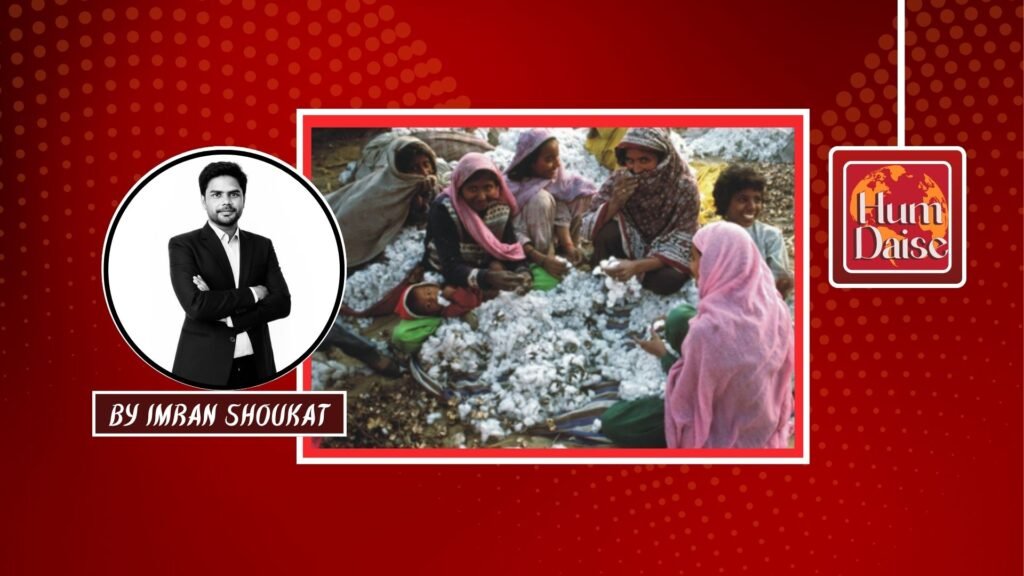
For millions of Pakistani children, childhood does not begin with a school bell. It begins at a brick kiln, a farm, a workshop, a roadside stall, a domestic workplace, or a factory floor. While other children carry schoolbags, many carry tools, loads, and responsibilities that should never belong to them.
Pakistan’s child labor crisis is far larger than the numbers often quoted in public debate. The latest child labor survey evidence compiled by the National Commission for Human Rights (NCHR) and UNICEF indicates that approximately 8.6 million children aged 5–17 are engaged in child labor, while around 6.6 million are involved in hazardous work that threatens their health, safety, or development (NCHR Pakistan).
These are not merely statistics. Behind every number is a child whose education, health, and future are being compromised.
A crisis hidden in plain sight
The scale of the problem varies considerably across Pakistan. Punjab accounts for more than 6 million children in child labor, according to the latest provincial survey evidence, making it the largest numerical contributor. The problem is also particularly severe in some districts, demonstrating that national averages can hide local crises (NCHR Pakistan).
Child labor is not confined to factories. Pakistani children work in agriculture, livestock, brick kilns, workshops, markets, restaurants, domestic households, and other parts of the informal economy. Agriculture is particularly important because much of this work remains hidden within family and rural economic activity.
The informal nature of employment makes the problem even harder to control. A child working inside a registered factory may be visible to inspectors; a child working on a farm, in a small workshop, or inside a household can remain virtually invisible.
Poverty is not an excuse
Poverty is one of the strongest drivers of child labor. When parents cannot earn enough to feed their families, children’s labor can become an unfortunate survival strategy.
But poverty alone does not explain the entire crisis. Weak social protection, limited access to quality education, low adult wages, informal employment, debt, lack of enforcement, and inadequate labor inspection all contribute to the problem. In many families, the immediate income generated by a child is valued more highly than the long-term benefits of education.
This creates a devastating cycle: poverty produces child labor; child labor produces school dropouts; school dropouts produce low skills; low skills produce low-paid employment; and low-paid employment reproduces poverty.
Breaking this cycle requires more than simply removing children from workplaces. Families must also be given alternatives.
The price children pay
The most serious cost of child labor cannot be measured in rupees. A child working long hours loses time for education, recreation, social development, and family life. Hazardous work can expose children to injuries, exhaustion, dangerous machinery, chemicals, and psychological distress.
UNICEF’s Pakistan child labor evidence also highlights the relationship between child labor and education, showing that increasing working hours can undermine children’s participation in school (NCHR Pakistan).
This is why child labor should not be treated simply as an employment issue. It is simultaneously an education, health, poverty, human rights, and economic development issue. A country cannot build a skilled workforce while millions of its children are being denied the opportunity to become educated.
The international community has warned us
The problem is not unique to Pakistan. According to the latest ILO-UNICEF global estimates, nearly 138 million children worldwide were engaged in child labor in 2024, including approximately 54 million in hazardous work (UNICEF).
The international community had committed itself through Sustainable Development Goal 8.7 to ending child labor by 2025. That deadline has passed, yet child labor remains a global reality (International Labour Organization).
For Pakistan, however, international commitments should not become an excuse for inaction. Pakistan has responsibilities under international child rights and labor standards, and it must translate those commitments into effective protection for children at home.
Legislation is not enough
Pakistan has laws prohibiting or restricting child labor, and institutions including the National Commission on the Rights of Child have repeatedly highlighted the need to protect children from exploitation.
The NCRC’s State of Children in Pakistan 2025 represents an important step towards evidence-based policymaking and monitoring of children’s rights (NCRC).
But legislation on paper cannot protect a child working behind a closed door. Enforcement must reach the informal economy, where many vulnerable children are employed. Labor departments need adequate personnel, resources, and independence. Inspections must be regular and effective, while employers who exploit children must face meaningful penalties.
At the same time, families should not be criminalized simply because they are poor. Enforcement must be accompanied by social protection, food security, educational support, and income opportunities for adults.
Education must become the alternative
The most effective long-term response to child labor is not merely to tell children to stop working. It is to make school a realistic and attractive alternative.
This means reducing the direct and indirect costs of education, improving the quality of public schools, providing support to poor families, and ensuring that children who have dropped out can return to education.
Pakistan cannot afford to choose between fighting poverty and fighting child labor. The two battles are inseparable. If a poor family loses the income of a working child without receiving any alternative support, the child may simply move from one dangerous workplace to another.
From statistics to action
Pakistan needs a national strategy built around five priorities.
First, regularly update child labor data so policymakers know where the problem is concentrated.
Second, strengthen labor inspection, particularly in the informal economy and high-risk sectors.
Third, provide targeted cash and social protection programs to families most vulnerable to child labor.
Fourth, guarantee meaningful access to quality education for every child, including those who have already dropped out.
Fifth, establish stronger cooperation among federal and provincial governments, schools, labor departments, civil society, employers, and international organizations.
The private sector also has a responsibility. Companies must examine their supply chains and ensure that products reaching Pakistani and international markets are not produced through child labor.
Pakistan’s greatest resource is not coal, cotton, minerals, or land. It is its people—and the most important investment Pakistan can make in its people begins during childhood.
The latest evidence showing 8.6 million children in child labor and 6.6 million in hazardous work should not merely generate another day of speeches. It should trigger a national response (NCHR Pakistan).
Every child rescued from hazardous work is a future student. Every child returned to school is a future worker with greater skills. Every family lifted out of extreme economic insecurity reduces the pressure that pushes children into labor.
A nation that allows its children to work instead of learn is consuming its future to survive its present.
Author
















Leave a Comment
Your email address will not be published. Required fields are marked with *