Sameer Ajmal
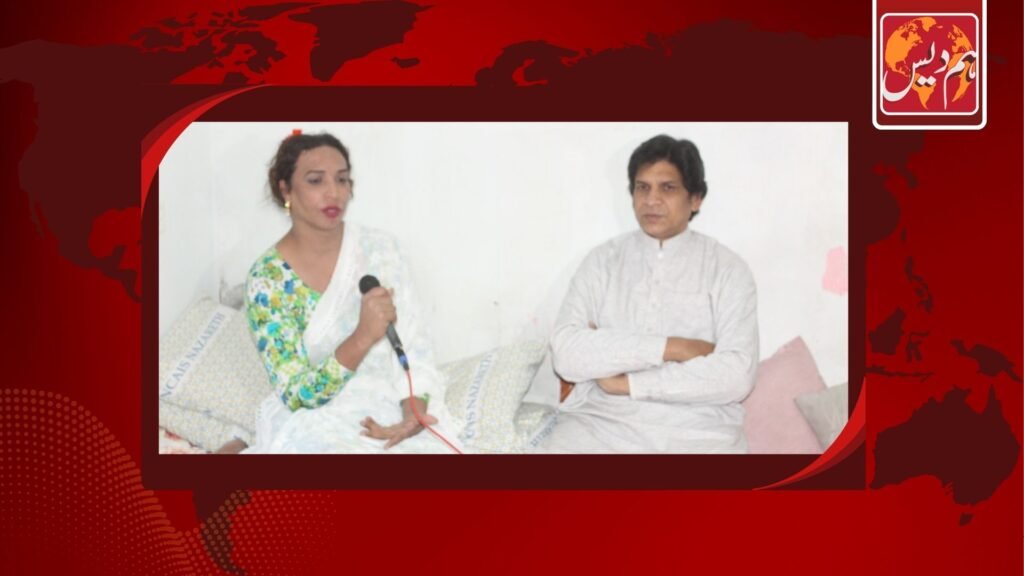
The problems and deprivations faced by transgender individuals begin in their mother’s lap and do not lessen as they grow older — in fact, their challenges only grow with time. Society continues to ignore them, placing countless restrictions on their lives, so many that it is difficult to even list them all. As a result, transgender individuals are often unable to fulfill even their religious obligations.Just as they face discrimination in society, transgender people also encounter biased attitudes in places of worship. Because of this, many of them hesitate to attend religious gatherings or visit places of worship.There is no definitive data on the exact population of transgender individuals in Pakistan. However, they were counted as a separate gender (transgender) for the first time in the sixth national census, following a Supreme Court order, which led the Bureau of Statistics to include a separate column for them in the census form.According to official statistics, the number of transgender people in the country is estimated to be around 21,000 — but the actual number is believed to be much higher. In nearly every city, town, and neighborhood, transgender individuals are present, clearly indicating that the real figure is significantly greater.The struggles and challenges of transgender individuals begin from the moment they are born. When a child is born who is identified as transgender, the family often refuses to accept them. In many cases, the child is handed over to a “guru” (a leader within the transgender community), or as they grow older and become disheartened, they choose to join the transgender community themselves.From that point on, a new phase of restrictions and hardships begins for them. These transgender individuals often find themselves unable to reconnect with their families, integrate into mainstream society, or even perform their religious duties.Mona, a transgender woman from the Christian community, says that when she goes to church to pray, she is not even allowed to enter. She’s told that if she wants to come to church, she must change her appearance. Mona says that even if she manages to get inside, she is sometimes told to sit on the men’s side and sometimes on the women’s side. The truth is, because of such treatment, she is unable to worship in church at all.Another transgender woman, Nasira, shares that during church prayers, she ties her hair tightly to avoid any disturbance, but still, someone pulls her scarf, others untie her hair. Even during prayer, she is teased and harassed as if she exists only for others’ amusement.Hazel, another transgender woman, shares similar experiences. She says that whenever she goes to worship, people pass remarks and hoot at her, which deeply disheartens her.Madam Ghoshi, who is around 52 years old, says she has never been to a mosque. She offers her prayers and performs her religious duties at home. She explains that due to her appearance, she feels she shouldn’t go to a mosque. She says, “We wear women’s clothes, do women’s makeup — how can we go to a mosque? We are spiritual people. When the goal is to please the Divine, it can be done from home too.”
This hesitation and the treatment they receive are the very reasons many transgender individuals avoid going to places of worship altogether.Regarding this, renowned Islamic scholar Maulana Muhammad Yousaf, states that there is no restriction on transgender individuals performing religious duties in places of worship. However, they should respect the sanctity of these places. They should avoid wearing clothing that draws unnecessary attention and maintain an appearance that does not cause discomfort to others. If transgender individuals come to places of worship dressed modestly, no one will stop them. However, if they come wearing makeup, it could compromise the sanctity of the place and distract other worshippers.
Pastor Ghazala Shafiq, who established a separate church for transgender individuals, says that whenever she met members of the transgender community, they would tell her they don’t go to church because they face difficulties there. People do not treat them well, and even church officials stop them from participating in religious activities like reading the Bible. This led her to consider establishing a separate church for them.
Pastor Ghazala Shafiq has since established the first church for transgender people in Karachi, where they now freely participate in religious practices. It is encouraging that a separate church has been established for them in Karachi, and madrassas have also been set up in Islamabad and Multan. However, to make transgender individuals productive members of society, they must be granted equal rights. To remove the hesitation and challenges they face in fulfilling religious duties, an inclusive environment must be created where transgender people can worship just like anyone else
Author












Leave a Comment
Your email address will not be published. Required fields are marked with *