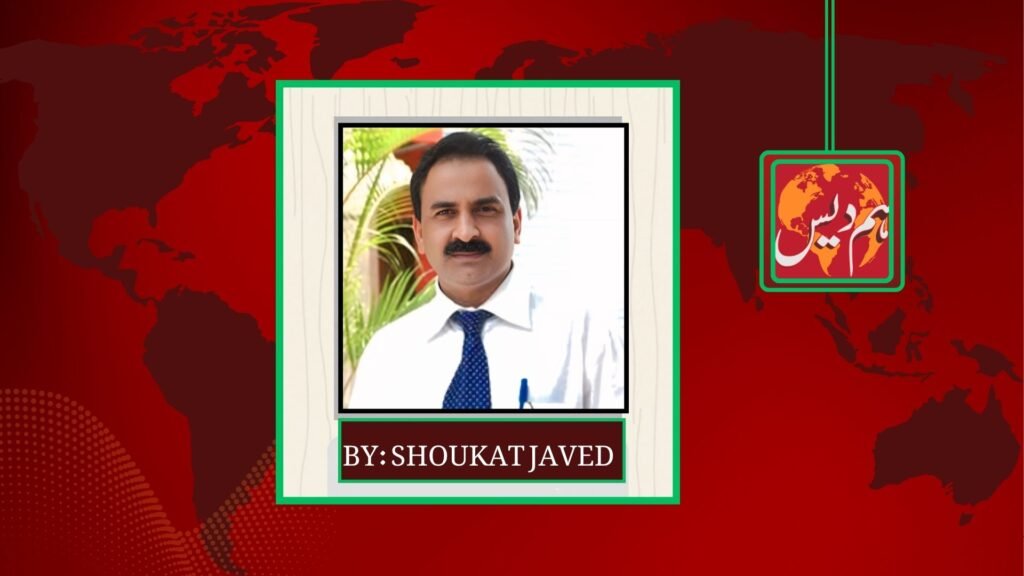
Shoukat Javed
There is no doubt that public problems are like a sensitive nerve of society. When people are in pain, it is the responsibility of the government to provide relief and address their grievances. Unfortunately, if we look at the current situation, the picture appears to be quite the opposite.
The rising prices of petrol, increasing electricity bills, and the overwhelming number of traffic fines have made life increasingly difficult for ordinary citizens. When the Interior Minister spoke about taking solutions to people’s problems to their doorsteps, instead of supporting such an initiative, opposition to the idea began to emerge.
One political party, the Pakistan Peoples Party (PPP), has gone so far as to say that the land is our mother and that anyone seeking to create new provinces would have to cross over our dead bodies. Such statements raise an important question: do we really want to prevent people’s problems from being resolved closer to their homes?
At the same time, the silence of the ruling political leadership is equally concerning. If such circumstances continue, public dissatisfaction may eventually reach a point where demands for a referendum or other constitutional and democratic alternatives can no longer be ignored.
But what, after all, does “Good Governance” actually mean?
Does it simply mean forming a government, drawing huge salaries, controlling billions in development funds, accumulating debts worth trillions of rupees—which even today’s children will eventually have to repay—forming assemblies, occupying the corridors of power, and enjoying the privileges of office?
Or does good governance actually mean that the state makes the lives of its citizens easier, provides them with basic necessities, and stands beside them during difficult times?
Whenever Pakistan faces a major emergency whether floods, natural disasters, humanitarian crises, or situations in which immediate assistance is required our armed forces are often visibly involved in relief and rescue operations. Whether it is cooperation in polio vaccination campaigns or assistance to flood-affected communities, people have repeatedly witnessed the armed forces standing alongside other state institutions to help citizens during times of crisis.
This spirit of service is certainly commendable. However, a fundamental question remains
Should citizens feel the presence of the state only during emergencies?
Good governance demands that the state improve people’s lives not only during crises but also in ordinary times. A good system of governance is one in which a child has access to quality education, a patient receives timely medical treatment, a young person has opportunities for employment, a farmer receives necessary support, a worker enjoys protection and dignity, and an ordinary citizen can obtain justice without unnecessary difficulty.
When we look at our assemblies and political system, we sometimes get the impression that political interests become more prominent than the basic needs of the people. Issues such as the number of provinces, administrative divisions, and the transfer of powers often become subjects of political debate, with different political parties presenting their own interests and perspectives.
If the creation of new provinces or administrative units is being considered, the decision should be based not on political interests but on public convenience, administrative necessity, and improved governance.
Provinces do not belong to any political party. They are part of the administrative rights and needs of the people.
If dividing a large province into smaller administrative units can bring government institutions, healthcare, education, employment opportunities, and justice closer to the people, then such a proposal deserves serious consideration. Likewise, if the existing system is more effective, political leadership should convince the public through sound arguments, facts, and credible
Author














Leave a Comment
Your email address will not be published. Required fields are marked with *