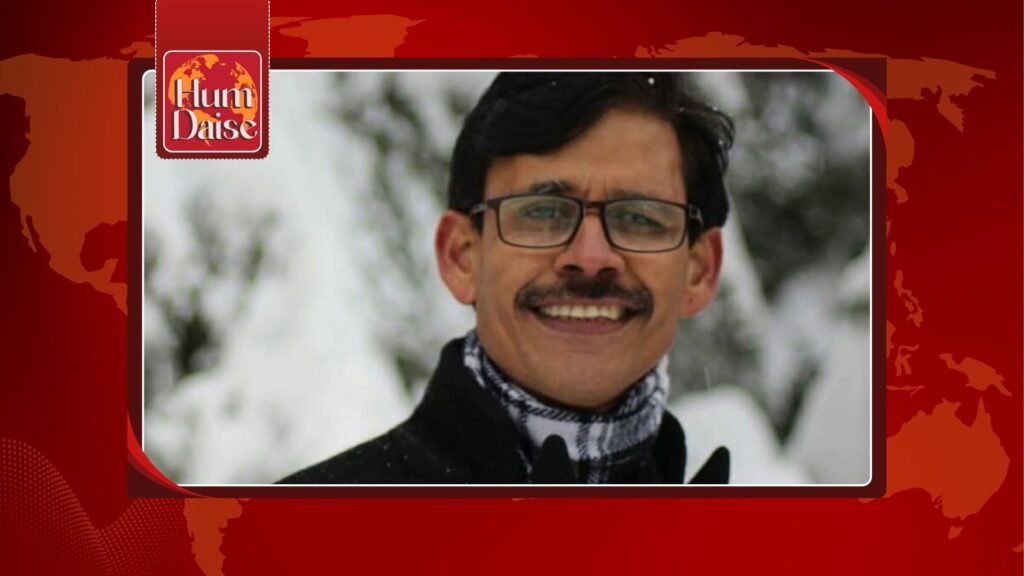
Samuel Bashir
In constitutional democracies, the protection of minority rights is often considered a litmus test for the strength of the legal system. In Pakistan, one of the most significant yet frequently overlooked provisions safeguarding religious freedom in education is Article 22 (1) of the Constitution of Pakistan.
This provision plays a crucial role in ensuring that no student is compelled to receive religious instruction or participate in religious ceremonies outside their own faith.
Article 22(1) provides:
“No person attending any educational institution shall be required to receive religious instruction, or take part in any religious ceremony or worship, if such instruction, ceremony or worship relates to a religion other than his own.”
Though brief in wording, its constitutional depth is profound.
Article 22(1) operationalizes the broader guarantee under Article 20, which secures the right to profess, practice, and propagate religion.
In practical terms, it ensures:
No forced participation in religious ceremonies.
No compulsory study of another religion’s doctrinal content.
Respect for individual belief systems within state institutions.
Freedom of conscience is a foundational democratic value, and this Article protects it at the formative stage of education.
Pakistan is home to Muslims, Christians, Hindus, Sikhs, Parsis, Bhais and other communities. In such a pluralistic society, state neutrality in education is essential.
Article 22(1):
Protects minority students from religious coercion.
Prevents discrimination in curriculum enforcement.
Reinforces equal citizenship regardless of faith.
The superior judiciary, particularly the Supreme Court of Pakistan, has repeatedly emphasized minority protection as a constitutional obligation.
In the landmark judgment of Supreme Court of Pakistan’s Justice Tassadaq Hussain Jellani June 19, 2014 (Suo Motu Case No. 1 of 2014), the Court reaffirmed that the State must actively protect religious minorities rights and ensure non-discrimination in public institutions. Article 22(1) forms part of this constitutional framework.
Citizens may invoke Article 22(1) through constitutional petitions under Article 199 (High Courts) or Article 184(3) (Supreme Court).
Article 22(1) aligns Pakistan with international human rights standards, particularly principles found in global instruments concerning freedom of religion and belief.
Its spirit also echoes the foundational vision articulated by the founder of Pakistan Quaid Azam Muhammad Ali Jinnah in his 11 August 1947 address, where he emphasized religious freedom and equal status of citizens before the law.
Despite its clarity, implementation challenges remain:
Inadequate availability of alternative subjects for non-Muslim students.
Social pressure in certain institutions.
Lack of awareness among administrators and students about constitutional protections.
The issue is not the absence of law but the consistency of enforcement.
Article 22(1) matters today because;
In an era where discussions on curriculum reform, minority inclusion, and religious tolerance dominate public discourse, Article 22(1) serves as:
A constitutional guarantee of dignity.
A safeguard against majoritarian exces.
A foundation for interfaith harmony.
Its proper implementation strengthens social cohesion and reinforces Pakistan’s identity as a constitutional democracy rather than a theocratic state.
Article 22(1) is more than a technical clause, it is a constitutional shield protecting students from religious coercion. For minorities, it represents security. For the majority, it reflects constitutional maturity. For the State, it is a legal obligation.
Ensuring its enforcement is not merely a minority issue, it is a test of Pakistan’s commitment to constitutionalism, equality, and justice.
Author


















Leave a Comment
Your email address will not be published. Required fields are marked with *